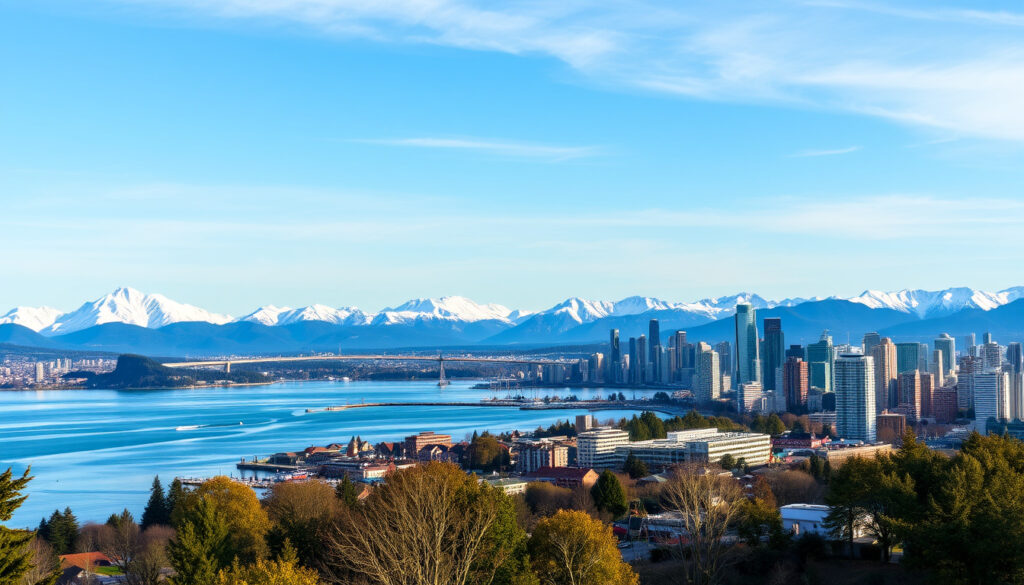
Things to Do in Vancouver: Top Attractions & Local Tips
There’s something about Vancouver that sticks with you long after you leave — maybe it’s the mountains rising straight out of the ocean, or the way the city juggles urban energy with trails that feel a world away. With more than 2.6 million people in the metro area and roughly 10 million visitors each year, it’s one of Canada’s most magnetic destinations — and this guide cuts through the noise to help you plan a trip that fits your budget and style.
Annual visitors to Vancouver: approx. 10 million (2019) ·
Size of Stanley Park: 405 hectares ·
Average cost of a meal: $20–$30 CAD per person ·
Number of rainy days per year: 166 days ·
Population of Metro Vancouver: 2.6 million (2021 census) ·
Average rent for a one-bedroom apartment: $2,200 CAD per month
Quick snapshot
- Stanley Park (Ordinary Adventures travel guide)
- Granville Island (Hand Luggage Only)
- Capilano Suspension Bridge (Capilano Bridge official site)
- Vancouver Aquarium (Vancouver Aquarium official site)
- Seawall walk (Ordinary Adventures)
- English Bay Beach (City of Vancouver)
- Lynn Canyon Park (Lynn Canyon official site)
- Street art in Mount Pleasant (Tourism Vancouver)
- Gastown bars (Backpacking with My Lens guide)
- Granville Street clubs (GetYourGuide activity guide)
- Rooftop lounges (The Emerald Palate itinerary blog)
- Theatre productions (We Are Global Travellers summer guide)
- Whistler (Whistler official site)
- Victoria (Tourism Victoria)
- Squamish (Explore Squamish)
- Bowen Island (Bowen Island official site)
Key facts about Vancouver at a glance:
| Label | Value |
|---|---|
| Province | British Columbia |
| Established | 1886 |
| Nickname | Raincouver, No Fun City |
| Major airport | YVR (Vancouver International) |
| Public transit | TransLink (SkyTrain, bus, SeaBus) |
| Famous for | Scenery, outdoor activities, multicultural food scene |
What should I not miss in Vancouver?
What are the top attractions in Stanley Park?
- The Seawall trail runs 28 km around the park’s edge and is one of the most popular walking and cycling routes in the city (Ordinary Adventures travel guide).
- Stanley Park spans 405 hectares, making it larger than New York’s Central Park.
- First Nations totem poles near the Brockton Point entrance are a frequent photo stop.
- The park includes beaches, a miniature train, and the Vancouver Aquarium.
If you only have half a day for the park, rent a bike from Denman Street and ride the Seawall clockwise — the views of the North Shore mountains from the Lions Gate Bridge side are the real payoff.
What is Granville Island known for?
- The Granville Island Public Market is a major food-and-shopping destination with local produce, artisan foods, and prepared meals (Granville Island official site).
- The island also houses galleries, a brewery, a kids’ market, and the Vancouver TheatreSports League.
- It sits under the Granville Street Bridge in False Creek and is accessible by water taxi, bus, car, or on foot from downtown.
Pro tip: go on a weekday morning before 11 a.m. to avoid the worst crowds. Weekends can feel shoulder-to-shoulder inside the market halls.
What makes the Capilano Suspension Bridge a must-see?
- The bridge spans 137 metres across and 70 metres above the Capilano River canyon (Capilano Bridge official site).
- The park also features Cliffwalk — a cantilevered walkway attached to the granite cliff — and Treetops Adventure, a series of suspension bridges between old-growth Douglas firs (Capilano Bridge official site).
- Arriving right when it opens at 9 a.m. helps you skip the mid-day queues.
Where can I see the best city views?
- The Vancouver Lookout at Harbour Centre offers a 360-degree panorama from 168 metres up.
- Grouse Mountain provides a sweeping view of the city and ocean from the North Shore — plus the Grouse Grind, a 2,830-step climbing trail if you want to earn the vista (GetYourGuide activity guide).
- Queen Elizabeth Park and the Bloedel Conservatory offer elevated views of the city skyline from a hilltop garden setting (The Emerald Palate itinerary blog).
The pattern: the most dramatic views require a bit of effort — a gondola ride, a hike, or at least an elevator. But the payoff is a city that looks like it was designed for postcards.
Capilano Suspension Bridge costs around $60 CAD for an adult ticket. If you want a similar experience for free, Lynn Canyon Park in North Vancouver has a suspension bridge over a canyon — no admission fee, though the bridge is shorter and less dramatic.
The implication: first-time visitors should budget for the big attraction unless they’re willing to trade a shorter experience for no cost.
First-time visitors: Stanley Park and Granville Island are non-negotiable; Capilano is worth the fee if you want the full experience, but Lynn Canyon offers a free alternative. Views come with effort.
How many days in Vancouver is enough?
Can you see Vancouver in one day?
- A single day allows a quick tour of Stanley Park and Granville Island, plus a stop in Gastown to see the Steam Clock (Backpacking with My Lens guide).
- You will have to pick a maximum of three activities to keep the day manageable.
One-day tip: skip Capilano and Grouse Mountain — they each eat half a day with transit and queuing.
What is a good 3-day itinerary for Vancouver?
- Day 1: Stanley Park (cycle the Seawall, visit the totem poles, lunch at Denman Street) + Gastown (Steam Clock, breweries).
- Day 2: Granville Island Public Market in the morning, Capilano Suspension Bridge in the afternoon, evening in Kitsilano or on Commercial Drive.
- Day 3: Queen Elizabeth Park + Bloedel Conservatory, then a walk through Chinatown and the Dr. Sun Yat-Sen Classical Chinese Garden (The Emerald Palate itinerary blog).
Three days is the most common recommendation for a first visit. It lets you hit the big attractions without feeling rushed, and you get at least one evening for the neighbourhood scene.
Should you stay a week in Vancouver?
- A week provides time for day trips to Whistler (2 hours north), Victoria (via ferry from Tsawwassen), or Squamish for hiking and rock climbing.
- You can also explore neighbourhoods like Commercial Drive, Mount Pleasant, and Kitsilano at a relaxed pace.
The implication: three days covers the essentials. Five to seven days unlocks the region — the coast mountains, Vancouver Island, and the Gulf Islands become reachable without rushing back.
If you are on a typical North American vacation schedule (5–10 vacation days), spending 3 nights in Vancouver and 3 nights in Whistler or Victoria gives you a better return on time than cramming seven days into the city alone.
The catch: travelers who only have a week should prioritize a split itinerary to experience the region, not just the city.
Travelers with limited time: three days is the sweet spot for a first visit; one day is doable but rushed; a week should include day trips.
Why is Vancouver known as the no fun city?
What is the origin of the ‘No Fun City’ nickname?
- The nickname dates back to the 1970s and 1980s, when strict liquor licensing laws forced bars to close early and limited live music venues.
- Some local accounts attribute the phrase to a newspaper columnist in the 1960s who complained about the city’s restrictive entertainment rules.
Is Vancouver’s nightlife really that bad?
- Vancouver has evolved significantly since the 1990s, with Gastown and Granville Street now hosting dozens of bars, clubs, and music venues.
- Last call is generally around 2 a.m. for many venues, still earlier than Toronto or Montreal where 3 a.m. licenses are more common.
- Outdoor recreation is abundant and culturally dominant — many locals prioritize early-morning hiking and biking over late-night barhopping.
How does Vancouver compare to other Canadian cities for fun?
- Montreal has a 3 a.m. last call and a more robust live-music scene. Toronto offers a wider range of late-night restaurants and after-hours clubs.
- Vancouver ranks higher for outdoor lifestyle than nightlife — the city has more hiking trails within 30 minutes of downtown than any other major Canadian city.
- The “No Fun City” label persists partly as a self-deprecating joke among residents, even as the entertainment scene has diversified.
The pattern: Vancouver is not a city where you go for a wild night out. It is a city where you go for a day on the water, a good dinner, and a couple of drinks before calling it early enough to catch sunrise on Grouse Mountain.
Nightlife seekers: Vancouver’s late scene is quieter than Toronto or Montreal, but the outdoor lifestyle more than compensates. The nickname is more historical than current.
What’s the best month to go to Vancouver?
Which months have the best weather?
- July and August offer the warmest and driest weather, with average highs around 22°C (72°F) and minimal rainfall (GetYourGuide seasonality guide).
- June and September are shoulder seasons with fewer crowds, mild temperatures, and still decent odds of sunshine (GetYourGuide seasonality guide).
What is the rainy season in Vancouver?
- November through February is the wettest period, with Vancouver averaging 166 rainy days per year — most of them concentrated in winter.
- March and April see rain taper off, with cherry blossom season adding colour to the city’s streets.
- Spring (April to June) and early fall (September to October) are often recommended for sightseeing because weather can be good while crowds are smaller than peak summer (GetYourGuide seasonality guide).
Are there seasonal events that make a month special?
- March–April: Cherry blossom festival across the city.
- June–August: outdoor concerts, the Stanley Park Third Beach drum circle on Tuesday evenings (when the weather cooperates), and the Celebration of Light fireworks competition.
- December: the Canyon Lights display at Capilano Suspension Bridge and the Christmas Market at Jack Poole Plaza.
The implication: if you want guaranteed dry weather, July and August are your safest bet. If you prefer smaller crowds and don’t mind a bit of drizzle, June and September deliver the best balance.
Vancouver’s best-kept seasonal secret is September: water temperatures are still warm from the summer, hotel rates drop after Labour Day, and the chance of a rain-free week is about 60% — better than October through April.
What this means: budget-conscious travelers who can tolerate a little uncertainty will get the best value in September.
Travelers planning a trip: July and August guarantee dry weather; June and September offer a good trade-off of fair conditions and smaller crowds.
Why are so many people leaving Vancouver?
What is the main reason people leave Vancouver?
- High cost of housing is the primary reason cited in surveys — the average rent for a one-bedroom apartment sits around $2,200 CAD per month, and detached home prices routinely exceed $1.5 million.
- A 2023 report on British Columbians leaving the province cited housing affordability as the top driver for moves to Alberta and other provinces.
How does the cost of living compare to other Canadian cities?
- Vancouver is consistently ranked as the most expensive city in Canada for housing, ahead of Toronto in most metrics.
- Grocery and transportation costs are also above the national average, though not as extreme as housing.
- Alberta cities like Calgary and Edmonton offer significantly lower housing costs — roughly 40–50% less for comparable homes — which has driven a net migration flow from B.C. to Alberta in recent years.
What are the top push factors?
- Traffic congestion on the North Shore and the Massey Tunnel corridor is a persistent frustration.
- Lack of affordable childcare is another commonly cited reason families leave.
- Lower wages relative to housing costs — Vancouver’s tech and film sectors pay reasonably well, but service and hospitality wages struggle to keep pace with rent.
The catch: Vancouver’s desirability as a destination works against its livability for locals. The same scenery and mild climate that attract global visitors also drive up demand for a limited housing supply, creating a tension between tourism appeal and resident affordability.
If you are considering a move to Vancouver, the rule of thumb is that you need a household income of at least $150,000 CAD to live comfortably — and even then, a down payment on a home will take years to save.
The pattern: for potential movers, the lifestyle trade-off is real — you pay a premium for the scenery, and the numbers confirm it.
Anyone thinking of relocating: high housing costs are the main reason people leave; a six-figure household income is almost essential for a comfortable life.
Where is the pink alley in Vancouver?
What is Pink Alley?
- Pink Alley is a narrow downtown lane painted entirely in bright pink, with murals and art installations on the walls.
- It was created as part of a public art project and has become a popular Instagram photo spot.
How do I find Pink Alley?
- The alley runs between Granville Street and Seymour Street, just south of Robson Street in downtown Vancouver.
- The closest intersection is Granville and Robson — the alley entrance is about halfway down the block on the west side.
- Look for the pink-painted pavement and street art on the walls; it is hard to miss once you are on the right block.
Is Pink Alley safe to visit?
- The alley is in a busy downtown area and is generally safe during daytime hours.
- As with any urban alley, visitors should stay aware of their surroundings after dark.
Pink Alley is a five-minute photo stop, not a destination. Pair it with a visit to the nearby Vancouver Art Gallery or a walk through Robson Street shopping.
How to plan your Vancouver trip — a practical step-by-step
- Step 1: Choose your travel window
- July–August for best weather and peak events.
- June or September for a balance of decent weather and fewer crowds (GetYourGuide seasonality guide).
- March–April or October–November for lower hotel rates and a quieter experience.
- Step 2: Book accommodation strategically
- Downtown core (West End, Yaletown, Gastown) is walkable to most top attractions.
- Kitsilano or Commercial Drive offer a more local vibe with good transit connections.
- Airbnb and short-term rentals are available but increasingly regulated — hotels are the safer bet for reliability.
- Step 3: Plan your transit
- SkyTrain from YVR airport to downtown takes about 25 minutes and costs less than $10 CAD.
- TransLink offers day passes for unlimited bus, SkyTrain, and SeaBus travel — currently about $11 CAD for a day pass.
- Ride-hailing (Uber, Lyft) is available but more expensive; taxis are metered.
- Step 4: Budget for food and attractions
- A casual meal costs $15–$25 CAD per person; a mid-range sit-down dinner runs $30–$60 CAD.
- Major attractions (Capilano, Grouse Mountain, Aquarium) cost $40–$70 CAD per adult.
- Free options: Lynn Canyon Park, Seawall walk, English Bay Beach, Queen Elizabeth Park (garden access is free).
Consider securing travel insurance for Canada through a reliable provider to cover unexpected expenses.
- Step 5: Pack for rain — even in summer
- A light rain jacket is useful year-round. Vancouver’s 166 rainy days mean you will likely see at least some drizzle on any trip.
- Layers are key because mountain breezes can drop temperatures quickly near the water.
The pattern: a well-planned trip balances weather expectations, budget, and transit choices to maximize time on the ground.
What’s clear and what’s not about Vancouver
Confirmed facts
- Stanley Park is 405 hectares and larger than Central Park (Ordinary Adventures).
- Vancouver hosted the 2010 Winter Olympics (Official 2010 Olympics site).
- The ‘No Fun City’ label stems from restrictive liquor licensing in the 1970s and 1980s.
- Average rent for a one-bedroom apartment in Vancouver is around $2,200 CAD per month (Numbeo cost of living).
- Granville Island Public Market is a major food-and-shopping stop for visitors (Granville Island official site).
- False Creek is a popular kayaking area with downtown skyline views (GetYourGuide activity guide).
What’s unclear
- The exact origin of the ‘No Fun City’ nickname is debated — some attribute it to a 1960s journalist, others to 1970s city council decisions.
- The precise number of people leaving Vancouver annually is not tracked at the city level; only provincial migration data is available.
- Whether the Stanley Park Third Beach drum circle still happens regularly on Tuesdays is not officially confirmed — it depends on weather and volunteer organizers (We Are Global Travellers summer guide).
The takeaway: the most reliable facts about Vancouver are well-documented; the uncertainties mostly revolve around local traditions and migration statistics.
What people are saying about Vancouver
The ‘No Fun City’ nickname originated from restrictive liquor licensing in Vancouver, which limited late-night entertainment options and earned the city a reputation for being less lively than other Canadian urban centres.
— Wikipedia entry on Nicknames of Vancouver
Housing affordability is the primary reason British Columbians cite for leaving the province, with many moving to Alberta where home prices are significantly lower.
— Report on British Columbians leaving B.C., 2023
June through September is the best time to visit Vancouver for warm, dry weather and access to outdoor activities like hiking, kayaking, and whale-watching.
— U.S. News Travel Best Times to Visit
Three different sources, three angles on the same city — but they all converge on the same truth: Vancouver’s appeal is real, but so are its tensions around cost and lifestyle.
For the traveller planning a visit, the choice is straightforward: come between June and September if you want the postcard version; come in the shoulder seasons if you want lower prices and fewer lines. Either way, pack a rain jacket and bring an appetite for the outdoors. Vancouver rewards those who show up ready to move — on foot, on a bike, or on the water.
Related reading: Best Travel Insurance Canada · Best Travel Insurance Canada
Frequently asked questions
Is Vancouver safe for tourists?
Yes, Vancouver is generally safe for tourists. Violent crime rates are low compared to other North American cities. Standard urban precautions apply — keep valuables secured, avoid the Downtown Eastside neighbourhood at night, and stay aware in busy tourist areas where pickpocketing can occur.
What is the best way to get around Vancouver?
TransLink’s SkyTrain, bus, and SeaBus network covers most attractions and neighbourhoods efficiently. A day pass costs about $11 CAD and is the most economical option for visitors. Biking is also popular, with dedicated lanes and bike-share programs available.
Do I need a car in Vancouver?
No. Downtown Vancouver is compact and walkable, and public transit reaches Stanley Park, Granville Island, and most major attractions. A car is only useful for day trips to Whistler, Squamish, or the North Shore mountains — consider renting one for those outings only.
What are the best beaches in Vancouver?
Kitsilano Beach offers a large sandy shore and a heated outdoor pool (reportedly Canada’s longest — about 137 metres). English Bay Beach is the most central and popular for sunset views. Jericho and Spanish Banks beaches are quieter and draw a local crowd.
Can you see whales in Vancouver?
Yes. Whale-watching tours operate from Granville Island and Steveston Harbour, with the best season running from April through October. May through September is the preferred window for orcas, humpbacks, and grey whales (The Emerald Palate itinerary blog).
What is the legal drinking age in Vancouver?
The legal drinking age in British Columbia is 19. You may be asked for photo ID at bars, liquor stores, and restaurants serving alcohol.
Are there any all-inclusive resorts in Vancouver?
No. Vancouver does not have all-inclusive resorts like those found in Mexico or the Caribbean. The city’s accommodation scene is dominated by hotels, boutique inns, and vacation rentals. All-inclusive packages are more common at resort destinations outside the city, such as Whistler.
Meer gerelateerde berichten
 Cavaliers vs Pistons Player Stats: 2026 Playoff Series
 Courtyard by Marriott Toronto Downtown – Location, Rates, Amenities & Reviews
 James Van Der Beek GoFundMe: Why $2M+ Was Raised for His Family
 When Is The World Series 2025 – Dates, Schedule & Results
 MSNBC Live Stream Free: How to Watch Online Without Cable
 Breast Lift Before and After: Photos, Recovery & Expectations
 How Many Innings in Baseball? MLB Rules & Variations