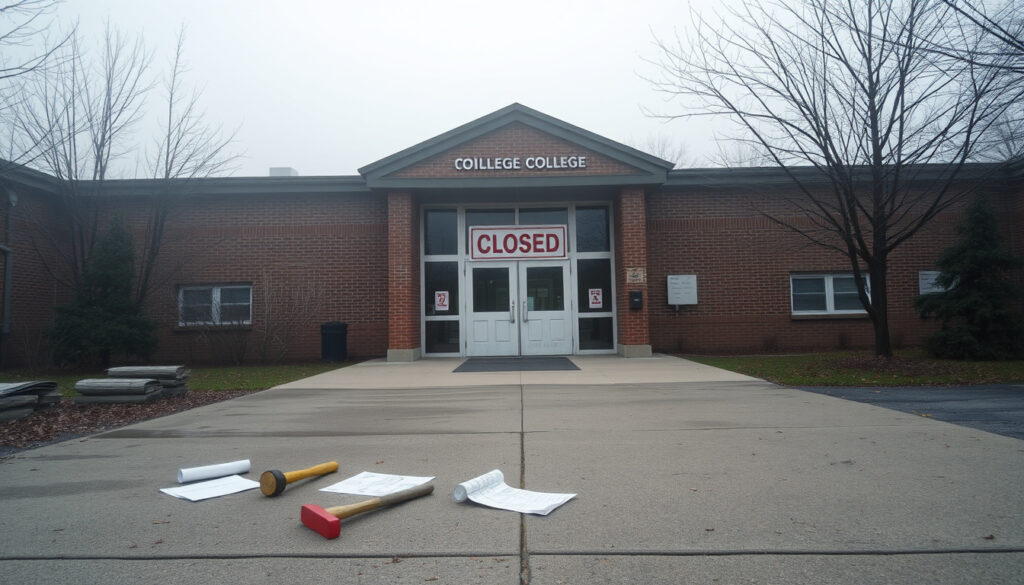
Ontario College of Trades Closure: What Happened and What’s Next
Ontario’s self-governing model for construction trades ended when the Ontario College of Trades closed in 2022, replaced by a Crown agency. The shift from OCOT to Skilled Trades Ontario reshaped certification, apprenticeship registration, and exam administration for over 140 trades across the province.
Established: April 8, 2013 ·
Regulated trades: Over 140 ·
Replacement body: Skilled Trades Ontario ·
Closure completed: January 1, 2022
Quick snapshot
- OCOT closed January 1, 2022 (HRAI Industry Newsletter)
- Skilled Trades Ontario is the successor Crown agency (Skilled Trades Ontario Official Transition Document)
- Existing credentials remain valid (Skilled Trades Ontario Official Transition Document)
- Exact membership renewal details post-transition (HRAI Industry Newsletter)
- Full impacts on journeyperson-to-apprentice ratios (Mathews Dinsdale Labour Law Analysis)
- April 2, 2025: STO takes over registrations and exams (Skilled Trades Ontario Service Update)
- February 1, 2026: In-house exam delivery begins (Skilled Trades Ontario)
- Register apprenticeships through STO portal (Skilled Trades Ontario Apprenticeship Guide)
- Renew compulsory certificates annually at $60 + HST (Skilled Trades Ontario Official Transition Document)
| Field | Value |
|---|---|
| Founded | April 8, 2013 |
| Establishing legislation | Ontario College of Trades and Apprenticeship Act, 2009 |
| Status | Closed, transitioned to Skilled Trades Ontario |
| Successor | Skilled Trades Ontario (Crown agency) |
| Website | skilledtradesontario.ca |
| Covers | Over 140 trades |
| Closure date | January 1, 2022 |
| Certificate renewal fee | $60 + HST annually |
What happened to Ontario College of Trades?
The Ontario College of Trades opened its doors on April 8, 2013, as the regulatory body for skilled trades in Ontario under the Ontario College of Trades and Apprenticeship Act, 2009 (Wikipedia — Ontario College of Trades). For eight years, it handled certification, compulsory trade designations, and membership for tradespeople across the province.
Timeline of closure
Eight key milestones mark the transition from OCOT to STO:
- 2009: Ontario College of Trades and Apprenticeship Act passed, establishing OCOT (Ontario Government Historical Overview)
- April 8, 2013: OCOT officially opened
- October 26, 2018: Ford government announced winding down of OCOT (IUOE Local 793 Union Announcement)
- May 6, 2021: Legislation introduced to replace OCOT with Skilled Trades Ontario (Mathews Dinsdale Labour Law Analysis)
- January 1, 2022: OCOT wind-down completed; STO launched as Crown agency (HRAI Industry Newsletter)
Reasons for dissolution
The Ford government cited concerns about the self-governance model for construction trades and sought to streamline regulatory processes. The wind-down created uncertainty in the construction industry regarding replacement structures, with legal observers noting the shift represented a fundamental change in how trades would be overseen in Ontario (Mathews Dinsdale Labour Law Analysis).
The transition eliminated the Journeyperson Candidates Class that had existed under OCOT’s membership model — a pathway no longer available to those seeking certification through that route.
What is the new name for Ontario College of Trades?
Skilled Trades Ontario (STO) is the official successor to OCOT, operating as a Crown agency since January 1, 2022. It assumed responsibility for issuing Certificates of Qualification in all trades with certifying exams and now serves as the primary point of contact for apprenticeship services (Skilled Trades Ontario Official Transition Document).
Skilled Trades Ontario overview
Unlike OCOT, which operated on a membership model, STO does not require membership fees. The agency maintains the Public Register for individuals practicing compulsory trades, continuing OCOT practices while adding new services. Key functions include overseeing apprenticeship programs, training standards, curriculum development, and certification exams (Skilled Trades Ontario Official Transition Document).
Transition process for members
Existing Certificates of Qualification and Registered Training Agreements continue under STO’s oversight — holders did not need to reapply or pay new fees at the time of transition. The STO Portal now provides access to training agreements and certificate management (Skilled Trades Ontario Apprenticeship Guide).
Skilled Trades Ontario consolidated trade regulation into a single Crown agency, creating a one-stop shop for apprentices, journeypersons, and employers — replacing the split oversight that had frustrated stakeholders under the previous model.
Is Ontario College of Trades closing?
Yes — OCOT officially closed on January 1, 2022, completing a wind-down process that began in October 2018. The closure was confirmed through industry communications and marked what observers called “a new era” for skilled trades regulation in Ontario (HRAI Industry Newsletter).
Official confirmation
The transition was codified through the Building Opportunities in the Skilled Trades Act, 2021, which established STO’s authority and outlined the transfer of functions from OCOT. Notice of contravention decisions under STO are reviewable by the Ontario Labour Relations Board within 15 days, providing due process for certificate holders (Mathews Dinsdale Labour Law Analysis).
Impact on existing members
OCOT members found that the membership-based Journeyperson Candidates Class was eliminated under STO’s structure. For those who had paid into OCOT’s membership system, there was no equivalent pathway under the new Crown agency model — a significant change for tradespeople who had used that route toward certification.
What is the easiest trade to get into in Ontario?
Entry difficulty depends on factors including training length, physical demands, and apprenticeship availability. General labourer and helper roles often serve as entry points, while certified trades like construction electrician or plumber typically require 4-5 year apprenticeships before full certification.
Quickest entry trades
Trades without certifying exams allow workers to begin employment immediately without formal examination. These include helper and assistant roles that provide on-the-job training while workers decide whether to pursue full certification. The key advantage: you can start earning right away and transition into formal apprenticeship later.
Apprenticeship timelines
Most compulsory trades require 4-5 years of apprenticeship, combining workplace training with technical instruction. Upon apprenticeship completion in trades with certifying exams, STO issues a Provisional Certificate of Qualification valid for one year — allowing work in compulsory trades while preparing for the final exam (Skilled Trades Ontario Completion Guide).
What trade is in high demand in Ontario?
Ontario faces ongoing demand across multiple skilled trades sectors, with projections for 2026 indicating continued shortages in several key areas. The province’s infrastructure investment and housing construction needs drive demand for construction trades, while healthcare expansion creates openings for mechanical trades.
2026 in-demand list
- Construction electricians
- Plumbers and steamfitters
- HVAC technicians
- Sheet metal workers
- Industrial mechanics
Skills Ontario insights
Industry groups have highlighted that Ontario colleges provide many of the best opportunities to prepare students for careers in the skilled trades, though institutions expressed frustration when excluded from 2023 government funding announcements for training centres (Confederation College News Release).
Starting April 2, 2025, STO becomes the first point of contact for apprenticeship registrations, completions, and certifying exams — changing how new entrants enter the trades system.
Timeline of key dates
The next major inflection point arrives April 2, 2025, when STO assumes direct administration of apprenticeship services from the Ministry, consolidating what had been a split responsibility.
| Date | Event |
|---|---|
| 2009 | Ontario College of Trades and Apprenticeship Act passed |
| April 8, 2013 | OCOT officially opened |
| October 26, 2018 | Ford government announces OCOT winding down |
| May 6, 2021 | Legislation introduced to replace OCOT with STO |
| January 1, 2022 | OCOT wind-down completed; STO launched |
| November 1, 2023 | New STO Certificate of Qualification design effective |
| April 2, 2025 | STO takes over apprenticeship registrations and exams |
| February 1, 2026 | STO begins in-house certifying exams |
Confirmed facts versus unclear areas
Confirmed facts
- OCOT closed January 1, 2022
- Skilled Trades Ontario is the official successor
- Existing credentials remain valid under STO
- Certificate renewal costs $60 + HST annually
- New certificates issued to qualifying journeypersons from January 1, 2022 onward
- Provisional Certificate valid for one year
- STO maintains Public Register for compulsory trades
- Prometric Canada administers exams from April 2, 2025
What’s still unclear
- Exact figures on apprenticeship completion rates before and after 2022
- Full scope of changes to journeyperson-to-apprentice ratios
- Specific regulations from the Minister on transition details
- Comparisons of certification exam pass rates under OCOT versus STO
What this means: most day-to-day certification and apprenticeship matters are now clearly handled by STO, but longer-term workforce data and ratio implications remain subjects industry observers are watching.
What experts say
“As of January 1, 2022, the Ontario College of Trades (OCOT) completed its almost four-year wind-down process. This has marked the official launch of the new crown agency Skilled Trades Ontario (STO).”
— HRAI Industry News
“This is hugely disappointing for our students, our college and employers in our community. Colleges provide many of the best opportunities to prepare students for careers in the skilled trades.”
— Kathleen Lynch, Confederation College President
“Skilled Trades Ontario is a new Crown agency which replaced the Ontario College of Trades.”
— Skilled Trades Ontario (Official Transition Document)
For Ontario apprentices and certified tradespeople, the transition from OCOT to STO means dealing with a single Crown agency for all certification and apprenticeship needs. The 2025 service shift will further centralize these functions — anyone currently in or considering a trade should ensure they’re registered with STO and aware of upcoming changes to how they access exams and renew credentials.
Related reading: Best Travel Insurance Canada · What Is a Phishing Scam
skilledtradesontario.ca, skilledtradesontario.ca, skilledtradesontario.ca, trades.ontariocolleges.ca
Aspiring tradesworkers navigating Ontario’s certification shifts can explore pre-apprenticeship pathways at the Skilled Trades College of Canada, bridging to official apprenticeships.
Frequently asked questions
What is Skilled Trades Ontario?
Skilled Trades Ontario (STO) is the Crown agency that replaced the Ontario College of Trades on January 1, 2022. It handles all apprenticeship registration, certification, and exam administration for trades in Ontario.
How to start an apprenticeship in Ontario?
You can register an apprenticeship through the STO Portal once you have a Registered Training Agreement with an employer. Starting April 2, 2025, STO becomes the direct point of contact for all apprenticeship registrations.
What is a Red Seal endorsement?
The Red Seal Endorsement is available for trades in the national program after passing the certifying exam. It indicates interprovincial certification, allowing tradespeople to work anywhere in Canada without additional testing.
Do you get paid during trade school in Ontario?
Yes — apprentices in Ontario are typically paid employees from day one of their apprenticeship. Wages increase as they progress through training levels, combining on-the-job experience with technical instruction.
What are the most in-demand trades for 2026?
Industry projections indicate continued demand for construction electricians, plumbers, HVAC technicians, sheet metal workers, and industrial mechanics in Ontario through 2026 and beyond.
How to lookup trade certification in Ontario?
The STO Public Register allows searches for individuals practicing compulsory trades. You can verify certifications and check status through the Skilled Trades Ontario website.
What happened to Ontario College of Trades membership?
OCOT operated on a membership model that has been eliminated under STO. There is no longer a membership fee or the Journeyperson Candidates Class that existed under OCOT.
Is there Ontario College of Trades renewal?
OCOT no longer exists, so there is no renewal process with that body. Certificates issued under OCOT remain valid and are now administered through STO. Compulsory trade certificates require annual renewal at $60 + HST.
Meer gerelateerde berichten
 Grimsby vs Man Utd Stats: Historic 2025 Carabao Cup Upset
 Matt Smith: Relationships, Health & Biography Facts
 Eddie Redmayne: Biography, Health, and Personal Facts
 CRA Payroll Calculator 2025: Free PDOC Guide & Tables
 Howard Lutnick: Net Worth, 9/11 Survival, Commerce Secretary
 Foot and Mouth Di ea e: What You Need to Know About HFMD and FMD
 Betalingspoortwachter Trustly verscherpt toezicht: gevolgen voor Noordse gokmarkt 2026
 War of the Worlds (2005 vs 2025): Key Differences & More