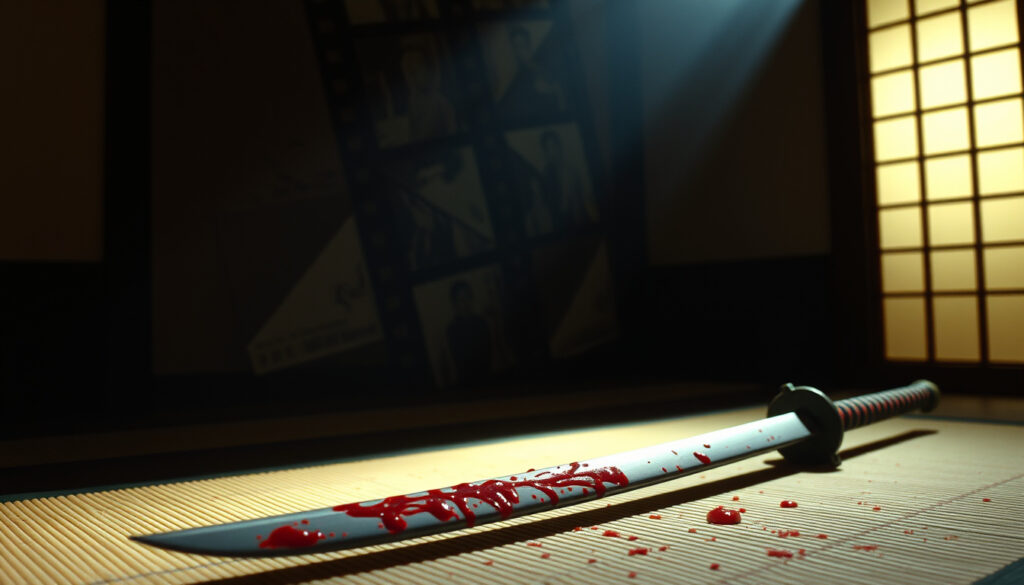
Kill Bill: The Whole Bloody Affair Differences Explained
Quentin Tarantino spent decades holding back the full version of Kill Bill, reportedly waiting until he owned the rights before letting audiences see what he originally intended. That version, Kill Bill: The Whole Bloody Affair, finally got a nationwide theatrical release on December 5, 2025 — running 253 minutes and restoring footage the studios once deemed too intense. For fans who’ve only known the two-volume theatrical cut, the differences are substantial enough to feel like a different film entirely.
Director: Quentin Tarantino · Year: 2004 · Runtime: 253 minutes · Combines: Kill Bill Volume 1 and 2 · Stars: Uma Thurman
Quick snapshot
- Combines Volume 1 and Volume 2 uncut (Men’s Journal)
- New 7-minute animated O-Ren Ishii backstory (My Modern Met)
- House of Blue Leaves fight restored to full color (Men’s Journal)
- Whether ‘Yuki’s Revenge’ video game mini-episode appears in all 2025 releases (Quentin Tarantino Archives)
- Exact details of all 14 restored edits beyond major sequences (Quentin Tarantino Archives)
- Full shot-by-shot comparison availability across regions (Quentin Tarantino Archives)
- VOD release: February 17, 2026 (Wikipedia)
- 4K UHD release expected January 2026 (Wikipedia)
- Regional theatrical rollouts beyond Germany yet to be announced (Wikipedia)
| Detail | Value |
|---|---|
| Director | Quentin Tarantino |
| Lead Actor | Uma Thurman |
| Runtime | 253 mins |
| Original Volumes | Kill Bill Vol 1 & 2 |
| Key Addition | Extended anime sequence |
| Intermission | 15 minutes |
| Anime Sequence Length | 7 minutes |
What is the difference between Kill Bill and Kill Bill: The Whole Bloody Affair?
The original theatrical release split Tarantino’s vision into two volumes released in 2003 and 2004, each running roughly two hours with a recap opening Volume 2. The Whole Bloody Affair eliminates that artificial split entirely, merging both films into a single continuous experience with a 15-minute intermission between acts.
Key structural changes
- Volume 1 cliffhanger ending — “Does she know her daughter is still alive?” — removed entirely (Men’s Journal)
- Volume 2 recap sequence eliminated — the film flows without pausing to re-explain
- Chapter breaks from the original theatrical cut no longer appear
- New title screen and subtle fade transitions added (Movie Censorship)
Restored footage details
The theatrical cuts removed 14 specific edits from Volume 1 alone to secure an R-rating, including extended violence and color changes (YouTube Video Analysis). The Whole Bloody Affair puts that footage back, making the violence feel rawer because music that once softened key moments is absent (Men’s Journal).
What’s included in Kill Bill: The Whole Bloody Affair?
The version includes every scene from both theatrical volumes plus material cut from the original releases — including footage from the Japanese cuts that never appeared in US or international releases (Quentin Tarantino Archives).
Full Volume 1 content
- Complete “Revenge” chapter structure with all characters
- Original black-and-white opening converted to color
- Anime sequence for O-Ren Ishii — including the 7-minute additional backstory (My Modern Met)
- Extended House of Blue Leaves massacre
Full Volume 2 content
- Complete Bride backstory and coma sequence
- Elle Driver’s confrontation fully intact
- Original ending with no added prologue
Extra intermission
A 15-minute intermission separates the two acts — giving audiences a break and reinforcing that this is one film, not two (Men’s Journal).
Is Kill Bill: The Whole Bloody Affair cut differently?
Yes — and the changes go deeper than simply adding missing scenes. Tarantino re-edited several sequences, sometimes making cuts that feel more violent than the originals (Men’s Journal).
Removed chapter breaks
- No “The 88-Review” chapter title card from Volume 1
- No “Make My Day” chapter break from Volume 2
- Continuous flow replaces episodic structure
Extended sequences
The House of Blue Leaves massacre plays in full color instead of black-and-white, with more gruesome details like ankle severing and music changes that make the sequence feel more visceral (Men’s Journal). The anime sequence for O-Ren killing Boss Matsumoto is re-edited and reportedly gorier than the theatrical version (YouTube Video Analysis).
What did Kill Bill: The Whole Bloody Affair add?
The most significant addition is an entirely new animated sequence showing O-Ren Ishii’s teenage confrontation with Boss Matsumoto — a 7-minute Production I.G segment that wasn’t shown at Cannes 2006 and has never appeared in any home video release until now (Quentin Tarantino Archives).
New anime sequence
- 7-minute animated backstory for O-Ren Ishii (My Modern Met)
- Covers her teenage years and the massacre at Matsumoto’s birthday party
- Not shown at Cannes 2006 premiere — added to later cuts
Restored clips
A new shot shows The Bride severing Sofie Fatale’s second arm — explaining her armless state later in the film (Men’s Journal). In the theatrical cut, Sofie had already lost both arms before that confrontation, so the sequence played as redundant rather than explanatory.
What changes were made in Kill Bill: The Whole Bloody Affair?
The changes fall into two categories: violence edits restored for the R-rating and material from Japanese releases included for the first time in US cuts (Quentin Tarantino Archives).
Editing differences
The theatrical Volume 1 made 14 specific edits to tone down violence for its R-rating (YouTube Video Analysis). Some examples:
- House of Blue Leaves: color vs. black-and-white change
- More graphic ankle severing in the House of Blue Leaves fight
- Music removed from scenes that softened the violence
- Extended gore in the O-Ren anime sequence
Runtime impact
The theatrical volumes combined ran approximately 224 minutes total. The Whole Bloody Affair runs 253 minutes — a 29-minute increase that includes intermission but also restored footage (Wikipedia).
The whole bloody affair vs. theatrical volumes: A side-by-side look
Three sequences show the sharpest contrast between what theatrical audiences saw and what Tarantino originally intended.
The changes affect everything from color grading to narrative coherence. Here’s how the two versions compare:
| Sequence | Theatrical Volumes | The Whole Bloody Affair |
|---|---|---|
| House of Blue Leaves fight | Black-and-white with music; limited gore | Full color; extended gore including ankle severing |
| O-Ren Ishii backstory | Brief anime intro at Matsumoto’s death | 7-minute extended backstory showing teenage O-Ren |
| Sofie Fatale arm scene | Single arm severed; armless state unexplained | Second arm severed — explains her armless state |
| Volume 1 cliffhanger | “Does she know her daughter is still alive?” | Eliminated; film flows without question mark |
| Volume 2 recap | Opening recap explaining Volume 1 | Eliminated; no recap sequence |
The implication is clear: theatrical packaging prioritized commercial pacing over narrative continuity, while Tarantino’s director’s cut restores the violent throughline he originally filmed.
The pattern is consistent: where the theatrical releases interrupted the narrative for pacing or rating concerns, The Whole Bloody Affair prioritizes narrative completeness over commercial accessibility.
The theatrical volumes were designed to work as separate films. The Whole Bloody Affair was designed as one. Every structural choice reinforces that difference.
Where to watch Kill Bill: The Whole Bloody Affair
The uncut version spent years only accessible through rare screenings — until Tarantino regained control of the rights and arranged a full release (Wikipedia).
- Nationwide theatrical: December 5, 2025, with 35mm and 70mm showings by Lionsgate (My Modern Met)
- VOD: February 17, 2026 (Wikipedia)
- 4K UHD: Expected January 2026
- Limited screenings: Vista Theater run in July 2025 (Wikipedia)
- German theatrical: April 16, 2026 (Quentin Tarantino Archives)
“Kill Bill: The Whole Bloody Affair” represents the quintessential rendition of Quentin Tarantino’s tribute to martial arts cinema.
— Men’s Journal (entertainment publication)
Tarantino said he had waited until he owned the rights before giving the film a full release.
— Quentin Tarantino (director, via Wikipedia)
The ‘Yuki’s Revenge’ mini-episode from the Kill Bill video game reportedly appears in the US theatrical release but may be absent from earlier international versions — check specific cut details before traveling for a screening.
The 35mm and 70mm showings offer something the home video release won’t: an archival presentation matching how Tarantino originally showed the film at Cannes in 2004.
Quotes from Tarantino and early screenings
Men’s Journal called it “the quintessential rendition of Tarantino’s tribute to martial arts cinema,” but the director himself stayed quiet about specifics for years. The world premiere at Cannes in 2004 showed a version that differed from what audiences finally received nationwide.
“Kill Bill: The Whole Bloody Affair” represents the quintessential rendition of Quentin Tarantino’s tribute to martial arts cinema.
— Men’s Journal entertainment coverage
Tarantino said he had waited until he owned the rights before giving the film a full release.
— Quentin Tarantino (director, via Wikipedia)
Those early screenings established the film’s reputation among die-hard fans long before the nationwide rollout reached general audiences.
Regional availability and differences
The theatrical release strategy varies by region, with some markets receiving screenings before others (Quentin Tarantino Archives).
United States
- Vista Theater limited run: July 2025
- Nationwide theatrical: December 5, 2025
- Available in both digital and 35mm/70mm film formats
- VOD: February 17, 2026
Germany
- Theatrical release: April 16, 2026
- Part of broader European rollout expected
Other regions
No specific dates announced for UK, Australia, or other markets as of this writing. Regional rollouts typically follow US theatrical windows, but Tarantino’s direct involvement suggests the schedule may differ from standard distribution patterns.
The ‘Yuki’s Revenge’ mini-episode from the Kill Bill video game reportedly appears in the US theatrical release but may be absent from earlier international versions — check specific cut details before traveling for a screening.
Related reading: Captain America Civil War Complete Movie Guide · Inter Miami vs PSG
The Whole Bloody Affair version features extended runtime with added footage, as the runtime differences guide details alongside viewing options today.
Frequently asked questions
What is Kill Bill: The Whole Bloody Affair?
It’s the uncut combination of Kill Bill Volume 1 and Volume 2, running 253 minutes with restored footage, a new 7-minute anime sequence, and structural changes that eliminate the two-volume split. Tarantino first showed it at Cannes in 2004 but waited years for full release rights.
How does it differ from the original Kill Bill volumes?
The theatrical volumes were released as two separate films with a recap opening Volume 2 and cliffhanger ending Volume 1. The Whole Bloody Affair eliminates both, combining both volumes into one continuous film with a 15-minute intermission. It also restores 14 edits made to tone down violence for the R-rating.
What extra content is in the Whole Bloody Affair version?
The most significant addition is a new 7-minute animated backstory for O-Ren Ishii showing her teenage confrontation with Boss Matsumoto, produced by Production I.G. Additional footage includes the Sofie Fatale arm-severing scene, extended House of Blue Leaves gore, and material from Japanese releases not included in US theatrical cuts.
Where to stream Kill Bill: The Whole Bloody Affair?
The uncut version isn’t currently available for streaming. The VOD release is scheduled for February 17, 2026. Theatrical screenings ran from July 2025 (limited) through December 2025 (nationwide), with additional international theatrical dates following.
Is there a 4K version of Kill Bill: The Whole Bloody Affair?
A 4K UHD release was announced for January 2026, following the theatrical and VOD windows. This would mark the first time the complete version has been available in high-definition home video format.
What is the runtime of Kill Bill: The Whole Bloody Affair?
The film runs 253 minutes, including a 15-minute intermission between acts. This is approximately 29 minutes longer than the combined theatrical volumes due to restored footage and structural changes.
When was Kill Bill: The Whole Bloody Affair first shown?
The world premiere was at Cannes Film Festival on May 23, 2004. However, the version shown at Cannes differed from later releases — it didn’t include the 7-minute O-Ren Ishii anime sequence that was added in subsequent cuts.
Does the Whole Bloody Affair include the O-Ren Ishii anime sequence?
Yes — and more than the theatrical releases. The Whole Bloody Affair includes a new 7-minute animated sequence showing O-Ren’s teenage years and the massacre at Boss Matsumoto’s birthday party, produced by Production I.G. This sequence wasn’t shown at the Cannes 2004 premiere.
Meer gerelateerde berichten
 630 CHED Listen Live: Free Stream, Oilers Games & Radio
 The Legend of Zelda: Tears of the Kingdom – full guide
 John Rzeznik: Biography, Appearance Change & Sobriety
 Tit for Tat Lyrics – Meaning, Analysis & Song Facts | Tate McRae
 What i a Dutch Oven? Cooking, Slang & Alternative
 What Is the Date Today MM-DD-YYYY – UTC Date and Format Guide
 Karan Aujla: Biography, Net Worth, Attack & Wife
 H&M Near Me: Ireland Stores, Deals & Zara Comparison