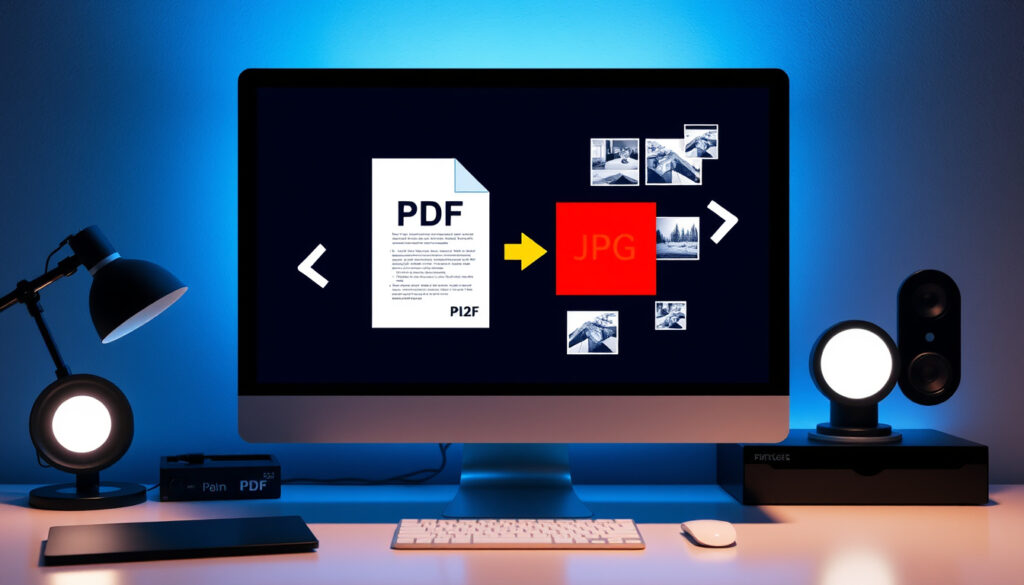
Convert PDF to JPG – Best Free Tools and Methods 2025
Converting documents from PDF to JPG format remains one of the most common tasks for anyone working with digital files. Whether you need to extract images from a multi-page document, share a visual snapshot of a contract, or prepare content for web publishing, understanding the available methods can save significant time and effort. The process has evolved considerably, with options ranging from quick online converters to powerful desktop applications capable of handling hundreds of files simultaneously.
This guide examines the most effective tools and techniques for transforming PDFs into JPG images in 2025, covering free online services, dedicated software, and command-line solutions. Each approach offers distinct advantages depending on factors such as file volume, quality requirements, and privacy considerations.
How to Convert PDF to JPG Online for Free
Online converters provide the fastest route to transform a PDF into a JPG image. These browser-based tools require no software installation and work across Windows, Mac, and mobile devices. Most services process files within seconds, making them ideal for one-off conversions or situations where speed takes priority.
Simply drag your PDF onto the converter page, select JPG as the output format, choose your preferred quality setting, and download the result. Multi-page documents typically compress into a ZIP archive containing individual images for each page.
Overview of Online Conversion Options
Several reputable services offer free PDF to JPG conversion without watermarks. Adobe Acrobat Online provides a free single-file converter with high-quality output and secure server handling, though batch processing requires a subscription. HiPDF and PDFCandy support unlimited files and pages with adjustable quality settings, making them popular choices for recurring conversion needs.
PDF24 Tools delivers unlimited conversions with high-quality results, supported by advertising. Canva offers similar functionality with particular strength in preparing files for social media and web use. MaxAI distinguishes itself by processing files without cloud uploads, addressing privacy concerns for sensitive documents.
Key Considerations for Online Converters
While online tools excel in convenience, users should evaluate their specific requirements before selecting a service. Batch capabilities vary significantly—some tools limit the number of files or impose size restrictions, while others offer unlimited processing. Quality settings typically range from high to medium to low, affecting both file size and image clarity.
Security practices differ across providers. Most reputable services automatically delete uploaded files after processing, but the timeline and verification methods vary. For highly sensitive documents, desktop solutions or command-line tools may provide greater assurance that files never leave your device.
| Method | Free? | Batch? | Quality | Platform |
|---|---|---|---|---|
| Adobe Acrobat Online | Yes (single file) | Limited | High | Browser |
| HiPDF | Yes | Yes | High | Browser |
| PDFCandy | Yes | Yes | Adjustable | Browser |
| PDF24 Tools | Yes | Yes | High | Browser |
| MaxAI | Yes | Yes | High | Browser |
Best Desktop Software for PDF to JPG Conversion
Desktop applications provide superior control over conversion parameters and typically offer more robust batch processing capabilities than their online counterparts. These tools prove especially valuable when working with large volumes of documents or when consistent, high-quality output is essential.
Wondershare PDFelement
Wondershare PDFelement consistently ranks among the top desktop solutions for PDF to JPG conversion. The software supports batch processing of multiple PDFs, converting each page as a separate image or combining pages into a single output. Its AI-powered quality enhancement helps maintain crisp text and accurate colors during conversion.
The application offers customizable settings for resolution, color depth, and output format, accommodating various use cases from web publishing to print preparation. A free trial version allows processing of up to 3 files with batch limits of 20MB, while paid plans start at $29.99 per quarter.
Adobe Acrobat for Desktop
Adobe Acrobat remains a standard choice for professionals requiring reliable conversion capabilities. The desktop application provides comprehensive batch processing features unavailable in the free online version. Users can create custom workflows, apply consistent settings across multiple files, and access advanced options for color management and image optimization.
For those already invested in the Adobe ecosystem, Acrobat integrates seamlessly with other Creative Cloud applications, facilitating streamlined document management across projects.
Desktop software handles 100+ files efficiently and processes everything locally, eliminating upload risks. Online tools excel for quick single files but may limit batch size or charge for bulk processing.
Convert Multi-Page PDF to Separate JPG Files
Multi-page PDF documents require special consideration during conversion. The primary decision involves whether to merge all pages into a single JPG or extract each page as an individual image file. Most modern converters support both approaches, but understanding the implications helps select the appropriate method.
Per-Page Extraction Method
Extracting each page as a separate JPG file produces a collection of images corresponding to the original document’s structure. This approach proves valuable when pages need individual distribution, further editing, or incorporation into different projects. Most converters generate numbered filenames automatically, simplifying organization of the resulting files.
The per-page method typically generates a ZIP archive containing all extracted images when using online converters. Desktop applications often allow direct folder output, maintaining the original file organization.
Batch Processing Large Document Collections
When converting hundreds of multi-page PDFs, efficiency becomes paramount. Desktop applications like PDFelement and BitRecover PDF to JPG Converter handle bulk operations without requiring manual export for each file. These tools process multiple documents sequentially or simultaneously, applying consistent settings across the entire batch.
BitRecover specifically targets Windows users seeking straightforward bulk conversion, supporting high-resolution output for both scanned and digitally created PDF documents. The application preserves original quality without introducing compression artifacts.
Tips for High-Quality PDF to JPG Without Loss
Achieving optimal image quality requires attention to several factors during the conversion process. Understanding these parameters helps avoid common pitfalls that result in blurry text, color shifts, or unwanted compression artifacts.
Resolution and DPI Settings
Resolution measured in DPI (dots per inch) directly impacts output quality. Standard screen display typically requires 72-96 DPI, while print-quality output demands 300 DPI or higher. Most converters offer quality presets labeled as high, medium, or low, which correspond to specific DPI values.
When available, manually setting 300 DPI ensures crisp text rendering and accurate color reproduction. Some tools provide preview functionality, allowing verification of results before committing to full batch processing.
Converting vector-based PDF content to raster JPG format inherently involves some quality trade-off. Complex vector graphics may appear slightly different when rasterized. Test a single page first when converting important documents.
Safety and Privacy Best Practices
For sensitive documents containing personal information, confidential business data, or legally protected content, prioritizing privacy becomes essential. Desktop applications and local command-line tools ensure files never leave your device, eliminating server-based exposure risks.
Reputable online services typically claim automatic deletion of uploaded files, but verification varies. When using browser-based converters, review the service’s privacy policy and data handling practices. MaxAI specifically highlights no-cloud-upload processing, offering transparency for privacy-conscious users.
Command Line and Open Source Solutions
Advanced users and developers often prefer command-line tools for their flexibility and automation potential. These solutions integrate well with scripts and workflows, enabling programmatic processing of large file collections.
ImageMagick stands as the most widely-used open-source option for PDF to JPG conversion. The command magick input.pdf -quality 100 output-%d.jpg converts a multi-page PDF into individual JPG files with maximum quality preservation. Installation occurs through Homebrew on Mac or directly from the official ImageMagick website for Windows and Linux systems.
Ghostscript provides an alternative command-line approach using gs -sDEVICE=jpeg -r300 -o output-%d.jpg input.pdf, where the -r flag sets resolution to 300 DPI. Both tools support batch processing through scripts that iterate across entire folder structures.
For Windows users seeking a free graphical interface, TTRPDFToJPG3 offers open-source batch conversion capabilities, as recommended in developer communities for its reliability and ease of use.
Why Convert PDF to JPG? Use Cases and Alternatives
The decision to convert PDF to JPG depends largely on intended use. JPG format excels in scenarios requiring broad compatibility, smaller file sizes, or easy sharing across platforms and devices. Unlike PDF, JPG images open directly in any image viewer without requiring dedicated software.
Common applications include creating visual snapshots of documents for email attachment, preparing content for websites that accept image uploads only, extracting page images for use in presentation software, and archiving document visuals in formats easily accessible without PDF readers.
However, PDF remains superior for scenarios requiring text searchability, precise layout preservation, form functionality, or document security features. Some users find PNG a better alternative when transparency support or lossless compression matters more than file size.
Summary and Recommendations
Converting PDF to JPG offers practical solutions across diverse needs, from quick single-file online conversions to enterprise-scale batch processing with desktop software. The optimal approach depends on factors including file volume, quality requirements, privacy sensitivity, and budget constraints.
For occasional single-file conversions, free online tools like Adobe Acrobat or HiPDF provide immediate access without installation. Users regularly processing multiple documents should consider desktop applications like PDFelement for their superior batch capabilities and quality controls. Those with technical expertise may prefer ImageMagick or Ghostscript for maximum flexibility and automation potential.
Regardless of chosen method, prioritizing quality settings appropriate to your output needs ensures results meet expectations. Testing with a sample document before processing large batches prevents wasted effort and ensures satisfactory outcomes.
Frequently Asked Questions
How do I convert a PDF to JPG?
Select an online converter or desktop application, upload your PDF file, choose JPG as the output format, adjust quality settings if available, and download the converted image. Multi-page documents will generate multiple JPG files or a ZIP archive.
Can I convert PDF to JPG on mobile?
Yes, most online converters work on mobile browsers. HiPDF and PDFCandy particularly excel at mobile batch conversions. Some apps also provide dedicated mobile conversion functionality through app stores.
What is the best PDF to JPG app for iPhone?
Browser-based converters work directly on iPhone without app installation. For dedicated apps, explore options in the App Store that offer PDF viewing and export to image formats. Quality and features vary, so review user ratings before downloading.
Are online PDF to JPG converters safe?
Reputable services auto-delete uploaded files after processing, but policies vary. For sensitive documents, use desktop software or local command-line tools to ensure files never leave your device. Review each service’s privacy practices before uploading confidential content.
How do I batch convert multiple PDFs to JPG?
Desktop applications like PDFelement or BitRecover handle batch processing most efficiently. Online tools including HiPDF, PDFCandy, and PDF24 support multiple file uploads. Command-line tools like ImageMagick can process entire folder structures through scripts.
Does converting PDF to JPG lose quality?
JPG compression introduces some quality loss compared to lossless formats. Setting quality to maximum (300 DPI for print, high quality for screen) minimizes degradation. Vector content in PDFs will rasterize, potentially changing appearance slightly. Test with one page first for important documents.
Meer gerelateerde berichten
 What Is the Maximum CPP Benefit for 2025? Amounts by Age
 The Legend of Zelda: Tears of the Kingdom – full guide
 COVID-19 Razor Blade Sore Throat: Symptoms, Relief & Variants
 War of the Worlds (2005 vs 2025): Key Differences & More
 Canon AE-1: Worth It? Price, Specs and Buyer Guide
 130 Euro to CAD: Current Rate, Conversion, Why EUR Strong
 Debby Ryan Movies and TV Shows – Complete Filmography Guide
 Gujarat Titans vs Punjab Kings Match Scorecard IPL 2026