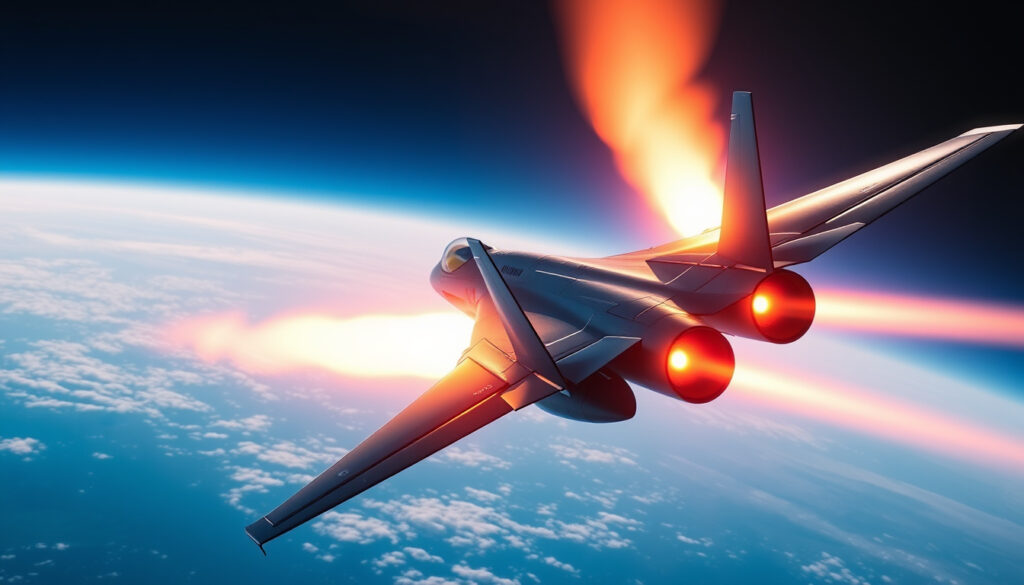
How Fast is Mach 10 in MPH? Top Gun Fiction vs Reality
When Tom Cruise’s Darkstar roared past Mach 10 on screen in Top Gun: Maverick, it outran anything real aircraft has ever achieved — the film depicts a speed no unmanned vehicle has matched and no piloted jet has ever approached. The jet was depicted traveling at roughly 7,826 mph — fast enough to cover a New York–Los Angeles flight in under 20 minutes. But here’s what the film left out: NASA actually got an unmanned aircraft within sight of that same Mach 10 milestone, years earlier, with a craft the length of a surfboard.
Mach 10 Speed: ~7,600 mph · Vs Speed of Sound: 10× faster · Fastest Manned Record: X-15 at ~Mach 6.7 · Unmanned Record: X-43A at Mach 9.6
Quick snapshot
- Mach 10 ≈ 7,600 mph at sea level (ScreenRant aerospace analysis)
- NASA X-43A hit Mach 9.6 on Nov 16, 2004 (NASA official record)
- No manned aircraft has ever reached Mach 10 (ScreenRant aerospace analysis)
- Exact mph figure for X-43A third flight varies by source (6,598–7,000 mph)
- Whether SR-72 hypersonic test program remains on its reported 2025 timeline
- 1967: X-15 sets manned rocket record at Mach 6.7
- 2004: X-43A hits Mach 9.6 on two record flights
- 2022: Darkstar fictional Mach 10.2 in Top Gun: Maverick
- SR-72 (Lockheed/Skunk Works) reportedly targets Mach 6 tests by 2025
- X-51A Waverider logged Mach 5 in 2010, keeping scramjet research active
The table below summarizes the key metrics that define the Mach 10 frontier — from sea-level conversions to the unmanned record that still stands after two decades.
| Metric | Value |
|---|---|
| Mach 10 MPH | 7,600–7,672 |
| KMH Equivalent | ~12,346 |
| Speed of Sound (sea level) | 760 mph |
| Highest Manned Speed | X-15 at Mach 6.7 |
| Unmanned Air-Breathing Record | X-43A at Mach 9.6 |
| X-43A Altitude (record flight) | 110,000 ft |
| X-43A Scramjet Burn Duration | 10 seconds |
| X-43A Program Cost | $230 million over eight years |
How Fast Is Mach 10?
Mach measures an aircraft’s speed relative to the local speed of sound — a ratio that shifts slightly with altitude, temperature, and air pressure. At sea level, where the atmosphere is densest, Mach 1 equals approximately 760 mph. At Mach 10, a vehicle travels at roughly 7,600 mph — ten times the speed of sound, fast enough to cross the Atlantic in under an hour.
Mach 10 in MPH
At sea level, Mach 10 translates to approximately 7,600–7,672 mph, depending on atmospheric conditions on a given day. The figure is not arbitrary — it is 10 × 760 mph, where 760 mph is the accepted speed of sound at sea level. ScreenRant notes that when the fictional Darkstar in Top Gun: Maverick reaches Mach 10.2, “Maverick was traveling roughly 7,826 mph.”
Mach 10 in KMH
Converting to metric: 7,600 mph equals approximately 12,346 km/h. For context, a commercial airliner cruises at around 575 mph (~925 km/h). At Mach 10, you would cover that same airliner’s ground distance in roughly one-tenth the time.
Factors Affecting Speed
Mach number is not a fixed value — it decreases at higher altitudes where the air is thinner and cooler. At 80,000 feet, Mach 10.2 equates to roughly 6,732 mph rather than 7,826 mph, a difference of about 1,000 mph from sea-level figures. Temperature and pressure gradients cause this variation, which matters enormously for hypersonic vehicle design.
Has Mach 10 Ever Been Reached?
Yes — but only by an unmanned vehicle. NASA’s X-43A, part of the Hyper-X program, came closer to Mach 10 than any air-breathing aircraft in history. The program flew three missions: a failed first attempt in 2001, then two record-breaking flights in 2004 that together redefined what scramjet technology could achieve.
NASA X-43A Record
The X-43A’s second flight on March 27, 2004, reached Mach 6.83 (nearly 5,000 mph). Its third flight on November 16, 2004, pushed to Mach 9.6 at approximately 110,000 feet. Guinness World Records certified both flights, with the Mach 9.6 speed recognized as the fastest air-breathing aircraft record. The X-43A flew for about 15 minutes on each mission, though its scramjet engine burned for only 10 seconds during the record runs.
NASA’s X-43A came within 4% of Mach 10 and still holds the air-breathing speed record nearly two decades later. No successor vehicle has officially surpassed it.
Other Hypersonic Achievements
The X-51A Waverider, a successor scramjet program, reached Mach 5 in its 2010 first flight — notable, but well below X-43A’s mark. The SR-72, reportedly in development at Lockheed Martin’s Skunk Works, has been publicly discussed as a hypersonic test vehicle targeting Mach 6 by around 2025, though that timeline remains officially unconfirmed by the program. The implication: even the most advanced next-generation programs are targeting Mach 6, not Mach 10, which tells you how far the engineering frontier remains from what Top Gun depicted.
Prior to X-43A, the air-breathing speed record was slightly over Mach 5, held by a ramjet missile. X-43A more than doubled that benchmark, proving scramjets could sustain combustion at hypersonic velocities where conventional jet engines fail.
Could a Human Go Mach 10?
Not with current technology — and not safely. The barriers are not political or economic; they are physics. Extreme heat, crushing G-forces, and materials science limits combine to make piloted Mach 10 flight a theoretical goal rather than an operational reality.
Human Survivability
At Mach 10, aerodynamic heating alone would generate surface temperatures exceeding 3,000°F on an aircraft’s leading edges. The Space Shuttle, by contrast, encountered roughly 2,300°F during reentry. No cockpit, pressure suit, or structural alloy currently in service can withstand sustained Mach 10 cruise temperatures without active cooling systems that add prohibitive weight.
Beyond heat, sustained acceleration at Mach 10 requires navigating air dense enough to impose lethal structural loads. A pilot pulling high-G turns at hypersonic speed would experience forces no human body can tolerate for more than a few seconds. No manned aircraft has ever reached Mach 10; the closest human record remains the X-15 at Mach 6.7, set in 1967.
Physics Challenges
The core engineering problem is propulsion. Jet engines need incoming air to compress and burn fuel. At Mach 10, the compression shock alone can destroy turbofan or ramjet components. Scramjets — supersonic combustion ramjets — solve this by maintaining supersonic airflow through the combustion chamber. NASA demonstrated this works in the X-43A, but that vehicle was 12 feet long, unmanned, and its scramjet burned for 10 seconds. The catch: scaling scramjet propulsion to a crewed vehicle while managing heat and structural loads remains an unsolved engineering challenge — and until someone solves it, the Darkstar stays in Hollywood.
What’s the Fastest a Jet Has Ever Flown?
The record books split into two categories: rocket-powered manned aircraft and air-breathing unmanned vehicles. The gap between them is enormous — roughly 2.9 Mach numbers — and both records have stood for decades.
X-15 Record
The X-15, a rocket-powered research aircraft developed by NASA and the US Air Force, holds the manned speed record at Mach 6.7, set in 1967. Pilot William J. Knight reached 4,520 mph (Mach 6.7) in a flight that lasted just over 10 minutes. The X-15 flew higher than most spacecraft, reaching the edge of space at 354,200 feet, but it was rocket-powered — not an air-breathing engine like a scramjet.
Top Gun Maverick Fiction
In Top Gun: Maverick, the fictional Darkstar is depicted reaching Mach 10.2 during a zoom-climb scene. The film’s producers consulted with naval aviators and aerospace engineers to ground the sequence in plausible physics — though the final Darkstar spec remains aspirational sci-fi. For comparison, the F/A-18E/F Super Hornet flown by Maverick in the film tops out at Mach 1.5 (~1,189 mph), roughly one-seventh Darkstar’s fictional top speed.
Hollywood gave Maverick a jet roughly 5× faster than anything that has ever carried a pilot. The real engineering frontier for hypersonic crewed flight sits somewhere between where the X-15 stopped in 1967 and where SR-72 tests may begin — if they remain on their reported schedule.
Hypersonic Speed Comparison
The comparison below spans the gap from Mach 1.5 to Mach 10 — each entry represents a distinct propulsion technology and era of development. What the table reveals is a propulsion cliff between rocket-powered and air-breathing designs.
| Aircraft / Program | Top Speed | Propulsion | Manned / Unmanned | Record Date |
|---|---|---|---|---|
| F/A-18 Super Hornet | Mach 1.5 (~1,189 mph) | Turbofan jet | Manned | In service |
| SR-71 Blackbird | Mach 3.2+ | Ramjet turbofan | Manned | In service |
| X-15 | Mach 6.7 (~4,520 mph) | Rocket | Manned | 1967 |
| X-43A (2nd flight) | Mach 6.83 (~5,000 mph) | Scramjet | Unmanned | March 27, 2004 |
| X-43A (3rd flight) | Mach 9.6 (~7,000 mph) | Scramjet | Unmanned | November 16, 2004 |
The SR-71, the fastest air-breathing manned aircraft, barely clears Mach 3. The X-15’s rocket burns a finite fuel load — once it’s gone, the vehicle glides. The X-43A’s scramjet, by contrast, harvests oxygen from the atmosphere while burning hydrogen fuel, making sustained hypersonic cruise theoretically possible — but only demonstrated for 10 seconds so far.
Hypersonic Flight Timeline
Six milestones define the modern hypersonic flight record, spanning from 1967 to 2022.
- 1967 — X-15 rocket-powered aircraft reaches Mach 6.7, the highest speed ever achieved by a piloted vehicle (ScreenRant aerospace analysis)
- 2001 — X-43A first flight attempt ends in failure due to vehicle malfunction (Wikipedia overview)
- March 27, 2004 — X-43A second flight reaches Mach 6.83, establishing first Hyper-X record (NASA official release)
- November 16, 2004 — X-43A third flight hits Mach 9.6 at 110,000 feet; Guinness certifies the record (NASA official release)
- 2006 — Guinness World Records 2006 edition recognizes both X-43A records (NASA official release)
- 2022 — Top Gun: Maverick releases, depicting Darkstar at Mach 10.2 (ScreenRant aerospace analysis)
The 20-year gap since X-43A’s last flight is notable. No air-breathing vehicle has surpassed its Mach 9.6 mark in official records. Whether SR-72 or a successor program changes that will depend on whether scramjet technology can finally scale beyond a 12-foot research drone.
Quotes from the Record Books
“On 16 November, 2004, NASA’s unmanned Hyper-X (X-43A) aircraft reached Mach 9.6.”
— Guinness World Records, official certification of the air-breathing speed record (NASA official release)
“The X-43A flight easily set a world speed record for an air-breathing engine aircraft.”
— NASA, official agency statement on the Hyper-X program results (NASA official release)
“Mach 10.2 is just over ten times the speed of sound (at sea level), meaning Maverick was traveling roughly 7,826 mph.”
— ScreenRant aerospace analysis of the Darkstar jet’s fictional performance (ScreenRant)
Summary
Mach 10 works out to roughly 7,600 mph at sea level — a velocity that puts a cross-country flight under 20 minutes but remains entirely beyond the reach of any piloted aircraft currently in service. NASA’s X-43A holds the closest confirmed approach at Mach 9.6, achieved twice in 2004 using scramjet propulsion, with a burn lasting only 10 seconds. The gap from Mach 9.6 to Mach 10 is not a gap in ambition; it is a gap in materials science, thermal management, and propulsion engineering that no program has yet bridged. For aerospace engineers, that last fraction of Mach number is where the frontier lives — and for now, it belongs to machines, not pilots.
What this means for anyone watching Top Gun: Maverick is that the Darkstar’s Mach 10.2 sprint represents not just a movie first, but a speed class that reality has yet to match with any aircraft, let alone one carrying a human being.
Related reading: Top Gun Maverick’s fictional Mach 10 jet · NASA’s hypersonic X-43A near Mach 10
youtube.com, scribd.com, nasa.gov, whiteeagleaerospace.com, 19fortyfive.com
Mach 10 clocks around 7,600 mph at sea level, but varies by altitude as this detailed Mach 10 guide thoroughly explains alongside real-world contexts.
Frequently asked questions
How fast is Mach 10 compared to the speed of light?
Mach 10 (~7,600 mph) is still glacially slow compared to light, which travels at 669,600,000 mph. Mach 10 is about 0.001% the speed of light — you would need light to circle the Earth nearly 7 times in the time it takes Mach 10 to cross a single time zone.
How fast is Mach 10 in a jet?
No current operational jet has reached Mach 10. The fastest jet in US Navy service, the F/A-18 Super Hornet, maxes out at Mach 1.5. Even the vaunted SR-71 Blackbird barely cleared Mach 3.2. The only confirmed Mach 10-class flight came from an unmanned 12-foot research vehicle.
Is Mach 10 possible in mph?
Yes — Mach 10 equals approximately 7,600 mph at sea level (760 mph × 10). At altitude the equivalent mph drops slightly due to cooler, thinner air, but the Mach number remains the same measure of local speed of sound.
What is the highest Mach ever recorded?
The highest confirmed Mach number for an air-breathing aircraft is Mach 9.6, set by NASA’s X-43A on November 16, 2004. For rocket-powered aircraft, the record is Mach 6.7 from the X-15 in 1967. Unmanned sounding rockets and reentry vehicles have exceeded these figures, but they are not powered air-breathing flight.
Can a plane fly at Mach 10?
No piloted plane has ever reached Mach 10, and none is operational today. The engineering challenges — extreme heat, G-forces, propulsion limits — remain unsolved for crewed aircraft. Unmanned test vehicles have approached Mach 10, but scaling that performance to a human-carrying aircraft is a different and unsolved problem.
How fast is Mach 10 in km/h?
Mach 10 converts to approximately 12,346 km/h at sea level. For scale, a Formula 1 car maxes out around 370 km/h, meaning Mach 10 is roughly 33 times faster than peak F1 speed.
Can a human survive Mach 10?
Not with current technology. The thermal and structural loads at sustained Mach 10 cruise would overwhelm any known aircraft materials and pressure suits. Even if a vehicle could theoretically withstand the heat, the G-forces from maneuvering at that speed would be lethal within seconds.
Meer gerelateerde berichten
 The Legend of Zelda: Tears of the Kingdom – full guide
 Wish You Were Here: Pink Floyd Song Story, Meaning & Funeral Fit
 Best Faina Rellena Near Me: Dublin Top Spots Guide
 Melissa Benoist: Husband Chris Wood, Supergirl Exit, and Scar
 Courtyard by Marriott Toronto Downtown – Location, Rates, Amenities & Reviews
 Jesse Plemons Weight Loss: 50 Pounds Naturally, No Ozempic
 House for Sale in Kingston: Galway & Dublin Property Guide