How Fast is Mach 10? MPH, KMH & Comparisons Explained
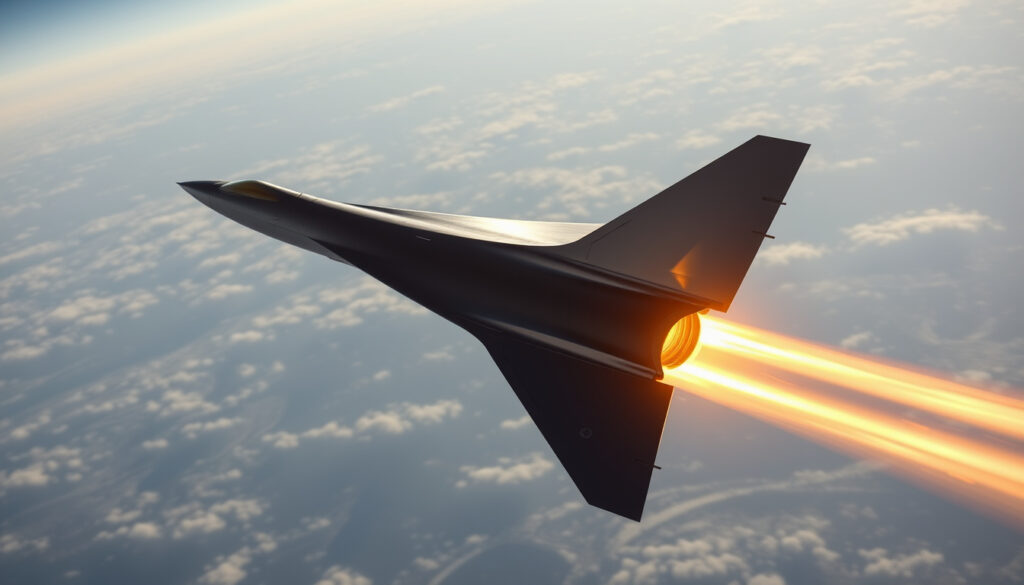
The Darkstar’s Mach 10.2 sprint in Top Gun: Maverick flirts with the edge of what’s physically possible—and the real world hasn’t caught up. The fastest air-breathing aircraft ever built managed Mach 9.6 (about 7,000 mph), a record that has stood since 2004. So what would it actually take to hit Mach 10, and could a human survive along for the ride?
Speed in MPH (sea level): 7,672 mph · Speed in KMH: 12,347 km/h · Times speed of sound: 10x · Record holder: NASA X-43A Scramjet · Altitude variation example: 6,598 mph at 60,000 ft
Quick snapshot
- Exact human survivability thresholds at hypersonic speeds
- Whether sustained manned hypersonic flight is achievable with current materials
- X-43A’s final flight: November 16, 2004 — the record has held for over two decades
- First flight (Mach 6.83): March 27, 2004; Guinness World Records recognized the achievement August 30, 2004
- No direct successor to the X-43A has entered service
- Hypersonic research continues, but practical manned Mach 10 flight remains distant
These specifications provide the baseline for understanding how hypersonic speeds translate across different altitudes and conditions.
| Label | Value |
|---|---|
| Mach Definition | Ratio to local speed of sound |
| Sea Level Speed | 7,672 mph / 12,347 km/h |
| Record Vehicle | NASA X-43A Scramjet |
| 60,000 ft Speed | 6,598 mph |
| Mach 1 at Sea Level | 760 mph |
| SR-71 Blackbird Top Speed | Mach 3.2 |
How fast is Mach 10 in mph?
Mach 10 means traveling ten times the speed of sound. At sea level, where the speed of sound is 760 mph, that translates to roughly 7,600 mph or about 12,347 km/h (MovieWeb). That’s fast enough to cross the width of the United States in under 25 minutes.
But here’s the catch: the speed of sound isn’t constant. It drops as you climb higher because the air thins and cools. At 80,000 feet, sound travels at roughly 660 mph instead of 760 mph. That means Mach 10 at cruising altitude translates to a slower ground speed than it would at sea level. According to calculations based on the physics, the same Mach number at 60,000 feet comes out to around 6,598 mph.
Mach 10 at sea level
At sea level under standard conditions, Mach 10 equals approximately 7,672 mph (Screen Rant). This is the baseline number you’ll see in most conversions, and it comes from multiplying the sea-level speed of sound (760 mph) by ten.
Mach 10 at high altitude
Altitude complicates the picture. Temperature and pressure both drop as you climb, and the speed of sound is directly tied to temperature. At 109,440 feet, where the X-43A achieved its record, the speed of sound was low enough that Mach 9.68 equated to only 6,755 mph ground speed. A jet flying at true Mach 10 at extreme altitudes would move slower in absolute terms than one flying at the same Mach number near sea level.
Conversion factors
The simple formula is Mach number × speed of sound at that altitude. For quick reference: at sea level, multiply by 760 mph; at 35,000 feet (typical cruising altitude), multiply by roughly 660 mph. The exact figures vary slightly depending on temperature, but these shortcuts give you reliable estimates without pulling out a calculator.
Has Mach 10 ever been reached?
Not quite—and the distinction matters. NASA’s X-43A came closer than any air-breathing vehicle before it, touching Mach 9.6 during its final flight on November 16, 2004 (NASA). That’s approximately 7,000 mph, just shy of the Mach 10 mark.
NASA X-43A Scramjet record
The X-43A was an unpiloted, 12-foot-long research aircraft powered by a scramjet engine—a supersonic-combustion ramjet that uses the vehicle’s own forward motion to compress incoming air (NASA). The scramjet operated for roughly 11 seconds during powered flight (19FortyFive), long enough to validate sustained hypersonic flight using atmospheric oxygen rather than onboard oxidizers.
The record it set—Mach 9.6 at 109,440 feet—has held for over two decades. No operational system has followed the X-43A program, and no direct successor has entered service (19FortyFive).
Other hypersonic achievements
Before the X-43A, the previous speed record for air-breathing vehicles belonged to a ramjet-powered missile that managed slightly more than Mach 5 (NASA). The X-43A more than doubled and then tripled that mark. Its first flight in March 2004 achieved Mach 6.83 (nearly 5,000 mph), which Guinness World Records recognized on August 30, 2004 (NASA).
Could a human go Mach 10?
The short answer is no, not in any survivable way—and the reasons go beyond engineering into human physiology. At Mach 10, a pilot would face g-forces, heat buildup, and atmospheric friction that current materials and suits simply can’t handle.
Physics challenges
The human body has practical limits. Sustained acceleration beyond roughly 9 g can cause loss of consciousness in trained pilots wearing g-suits, and that’s before you factor in the aerodynamic loads at hypersonic speeds. The heating problem is equally severe: at Mach 10 near sea level, air compression against the airframe generates temperatures that would melt conventional aluminum and titanium structures. A human inside would face radiant heat loads no flight suit is designed to deflect.
Achieving Mach 10 in real life would be extremely dangerous and likely result in death (MovieWeb). Real-world technology is far from achieving manned flights at Mach 10 speeds (Screen Rant).
Human survivability limits
The record for manned aircraft flight sits at Mach 6.7, set by pilot William J. Knight in the X-15 back in 1967 (Screen Rant). That record still stands—nearly six decades later—and even that speed required a rocket-powered aircraft with a specially designed thermal protection system. Knight reached Mach 6.7 for mere minutes; sustaining Mach 10 for any meaningful duration would demand propulsion and materials technology that doesn’t exist yet.
Pilots face a hard ceiling at around Mach 7, set by g-forces and heat. Hollywood makes it look survivable; physics makes it fatal. The X-43A flew empty for a reason.
What’s the fastest a jet has ever flown?
The fastest jet is unpiloted. NASA’s X-43A holds the world speed record for air-breathing vehicles at Mach 9.6, which works out to about 7,000 mph (NASA). For context: the SR-71 Blackbird, the fastest air-breathing manned vehicle, maxed out at just over Mach 3.2. The X-43A more than tripled that.
Top record holders
Ranking the extremes: the X-43A leads at Mach 9.6, followed by the X-15 (manned) at Mach 6.7 from 1967, then the SR-71 Blackbird at Mach 3.2. Standard U.S. military fighter jets like the F-15 Falcon sit around Mach 2.5, and the F/A-18E/F Super Hornet used in Top Gun: Maverick filming maxes out at Mach 1.5 (about 1,189 mph) (Screen Rant). There’s a massive gap between what Hollywood depicts and what’s actually flying.
Jet vs scramjet
Conventional jet engines compress air mechanically with spinning fans. Scramjets skip the mechanical compression entirely—the incoming supersonic airflow compresses itself against internal geometry, and fuel ignites directly in that high-speed stream. The X-43A’s scramjet engines were designed to operate only when incoming airflow matched specific conditions, which is why they worked across a narrow speed window between roughly Mach 7 and Mach 10 (Wikipedia). Conventional turbofan engines stall out long before those speeds, which is why there’s no path from Mach 3 to Mach 10 using the same propulsion type.
Can a plane fly at Mach 10?
Scramjet technology makes it theoretically possible, but practical barriers keep it out of reach for now—especially for piloted aircraft. The X-43A proved the concept but demonstrated it with an unpiloted, 12-foot research drone.
Current tech limits
The materials problem is acute. At Mach 10 near sea level, skin temperatures on an aircraft would climb past 3,000°F—hot enough to melt steel. Even at the X-43A’s operating altitude of 100,000+ feet, where air is thin, heating remains a limiting factor. The scramjet’s combustion window is also narrow: the engine only lights at specific Mach ranges, which is why the first two X-43A aircraft were designed for Mach 7 while the third pushed past Mach 9.8 (Wikipedia).
Hypersonic developments
Research programs continue. The X-43A was part of NASA’s Hyper-X program, which explicitly tested dual-mode ramjet/scramjet propulsion across the Mach 7 to Mach 10 range (19FortyFive). But “program” is the operative word—this was a research project with no operational follow-on. Two decades later, no one has flown faster, and no military or commercial hypersonic air-breathing vehicle has entered service.
The Top Gun: Maverick Darkstar hits Mach 10.2 on screen. The X-43A maxed out at Mach 9.6 in reality—and it needed a rocket boost to get there. That single Mach-number gap represents decades of engineering that never materialized.
Three aircraft define the speed frontier, with major gaps between them:
This comparison shows how dramatically performance drops as you move from experimental unpiloted craft to operational manned aircraft.
| Aircraft | Type | Top Speed (Mach) | Top Speed (mph) | Notes |
|---|---|---|---|---|
| NASA X-43A | Unpiloted Scramjet | 9.6 | ~7,000 | Record set November 16, 2004 |
| North American X-15 | Manned Rocket | 6.7 | ~4,520 | William J. Knight, 1967 |
| SR-71 Blackbird | Manned Turbojet | 3.2 | ~2,200 | Fastest air-breathing manned jet |
The implication: each step down the speed ladder represents not just engineering limits, but fundamental shifts in what technology can achieve and who can operate it.
The gap between the X-43A’s Mach 9.6 and true Mach 10 isn’t just numerical—it’s the difference between validated hypersonic flight and the threshold where current materials and propulsion systems break down entirely.
— Engineering analysis from 19FortyFive (Aviation and defense publication)
At Mach 10.2, a pilot could theoretically travel the width of the United States in under 25 minutes. But the engineering required to survive that speed—let alone control it—doesn’t exist yet.
— Speed analysis from Screen Rant (Entertainment and tech)
Related reading: What Is a Phishing Scam · Words With Friends Cheat
NASA’s record-breaking X-43A hit this hypersonic mark in 2004, with the Mach 10 altitude guide detailing precise mph and kmh figures at varying altitudes.
Frequently asked questions
How fast is Mach 10 compared to the speed of light?
Mach 10 is roughly 0.001% the speed of light. Light travels at 669,600,000 mph; Mach 10 at sea level is about 7,672 mph. The ratio makes clear why “Mach 10” sounds impressive until you stack it against what’s truly fast.
How fast is Mach 10 in a jet?
No manned jet has reached Mach 10. The fastest operational fighters max out around Mach 2.5 (F-15) to Mach 2+ (F/A-18E/F Super Hornet). Getting to Mach 10 would require an entirely different propulsion system like a scramjet—and the vehicle would need to be unpiloted.
How fast is mach 10 top gun maverick?
The fictional Darkstar in Top Gun: Maverick reaches Mach 10.2—about 7,826 mph at sea level. At the film’s implied altitude of 80,000 feet, that would translate to roughly 6,732 mph. The movie depicts sustained hypersonic flight that no real aircraft has achieved.
What is the highest Mach ever recorded?
The highest Mach number achieved by an air-breathing vehicle is Mach 9.6, set by NASA’s X-43A on November 16, 2004. For piloted aircraft, the record is Mach 6.7, set by William J. Knight in the X-15 in 1967.
How Fast Is Mach 10, And Can A Human Survive The Speed?
Mach 10 translates to roughly 7,672 mph at sea level. A human could not survive that speed in a conventional aircraft—the g-forces, heat, and aerodynamic loads would be fatal. The human ceiling for piloted flight sits around Mach 6-7 under ideal conditions with a rocket-powered craft.
How fast is Mach 10 compared to the speed of sound?
By definition, Mach 10 is ten times the speed of sound. At sea level, sound travels at 760 mph, making Mach 10 equal to about 7,672 mph. But “the speed of sound” varies with altitude and temperature, so the same Mach number translates to different ground speeds depending on where you fly.
Is Mach 10 possible in mph?
Yes—Mach 10 at standard sea-level conditions equals approximately 7,672 mph or 12,347 km/h. That’s a fixed conversion when using the standard speed of sound (761 mph at 68°F at sea level), though actual values shift with temperature and pressure.
Meer gerelateerde berichten
 Anatomy of a Scandal: True Story, Cast, Plot & Season 2
 Debby Ryan Movies and TV Shows – Complete Filmography Guide
 Shahid Kapoor: Biography, Movies, Wife, Age & Height
 Wednesday Season 2 Cast – Full List and New Faces
 Scott Galloway Net Worth, Political Views, and Personal Life
 Jason Sudeikis Movies and TV Shows: Complete Filmography
 How Many Letters in Alphabet? 26 A-Z English Count
 What Time Zone Am I In in Ireland? GMT/IST Guide